
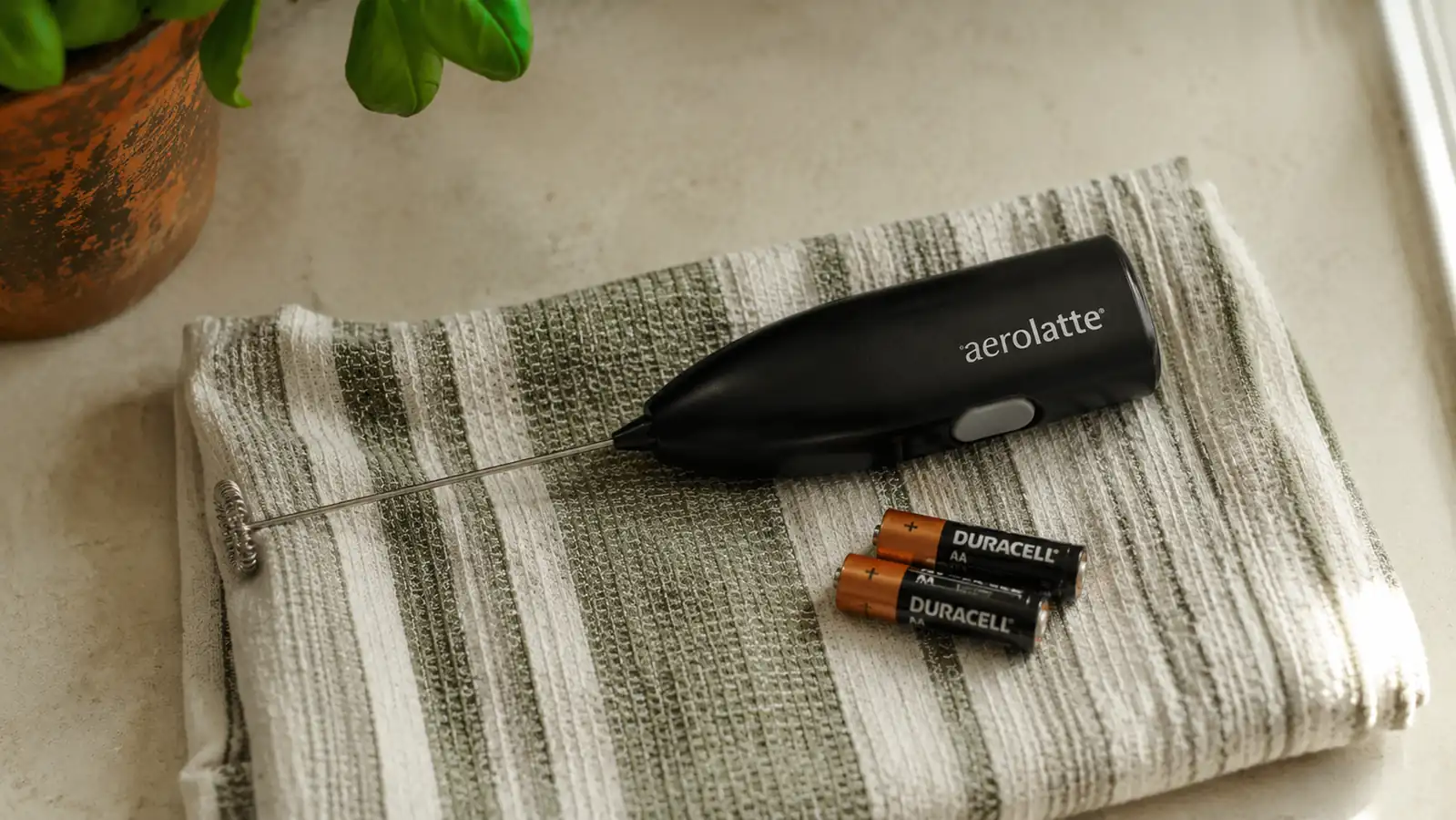
I read about a dozen glowing reviews before I bought this thing, and every single one of them read like an ad. Perfect foam, lasts forever, best nine dollars you'll ever spend. Nothing about the parts that actually annoy you once you own it. So I bought the Zulay handheld frother specifically planning to write the review those other reviews skipped. I'm now two batteries deep and there's a third sitting half-dead in the drawer as I write this, and I've got a much more honest list than the one I started with.
This isn't a takedown. I still use the Zulay Kitchen Handheld Milk Frother most mornings and I'd probably buy another one if mine died tomorrow. But there's a real gap between what the five-star reviews tell you and what actually happens once you've run this thing through daily use for months. That gap is what this article is about.
The Quick Verdict
A good, cheap frother with three real annoyances nobody warns you about: battery drain math that's worse than advertised, a plastic seam that lets moisture in, and a whisk head that eventually loosens on its shaft.
Amazon Check Today's Price →The Foam Is Real. So Are the Quirks. Judge For Yourself.
Nothing here is a dealbreaker for most people, and at this price the math still works out in the frother's favor. See today's price and read the full breakdown below before you decide.
Amazon Check Today's Price on Amazon →How I Tested It
I didn't do a polite, careful, once-a-day test. I used this frother the way I actually drink coffee, which is inconsistently and sometimes twice back to back when I'm indecisive about whether I want a latte or a matcha. I also let my husband use it, which matters, because he's rougher on kitchen tools than I am and he doesn't rinse anything the second he's done with it. Between the two of us, this frother has seen closer to four uses a day on average, some days zero, some days six.
I kept a running note on my phone every time I swapped a battery, every time I noticed something wear down, every time the foam came out worse than usual. That log is where most of this review comes from. It's not scientific, it's just honest, which is more than I can say for the review pages that clearly never left the Zulay's box open past week one.
I also made a point of not babying it. I've dropped it on the counter more than once, left it wet in the sink overnight a handful of times when I was too tired to deal with dishes, and used it back to back on cold milk straight from the fridge instead of always warming it first. A review written under lab conditions doesn't tell you much about how a nine-dollar gadget survives in a real kitchen with real distractions, so I tried to recreate exactly that kind of ordinary carelessness.
I should say up front that I'm not new to cheap kitchen gadgets. I've bought and returned more than a few over the years, so I went into this Zulay purchase with a fairly skeptical eye and a low bar for what nine dollars actually buys you. That's part of why the honest gaps below surprised me. This thing clears the bar in most places, it just doesn't clear it everywhere, and a fair review has to say both things at once.
The Battery Math Nobody Actually Runs
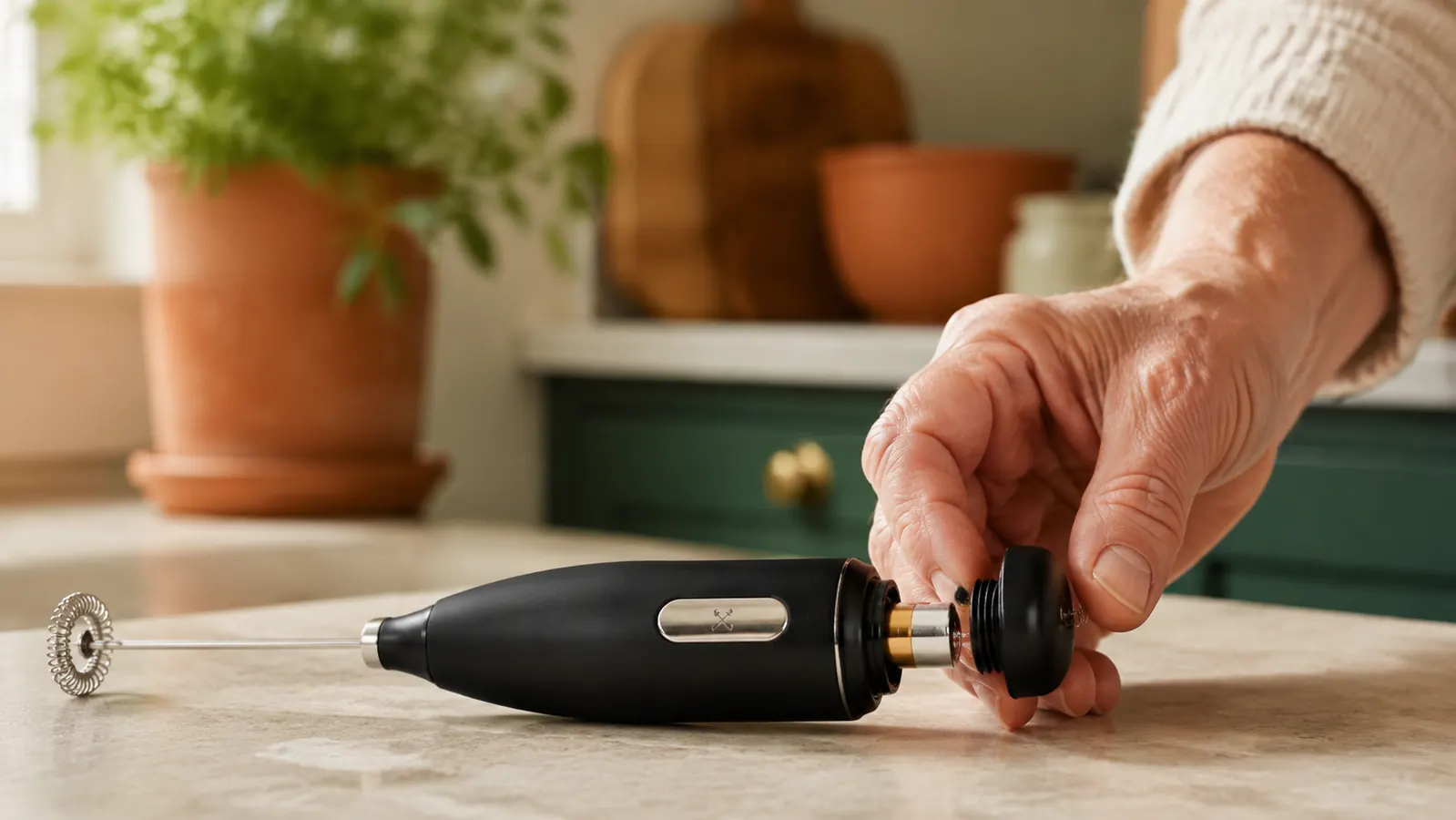
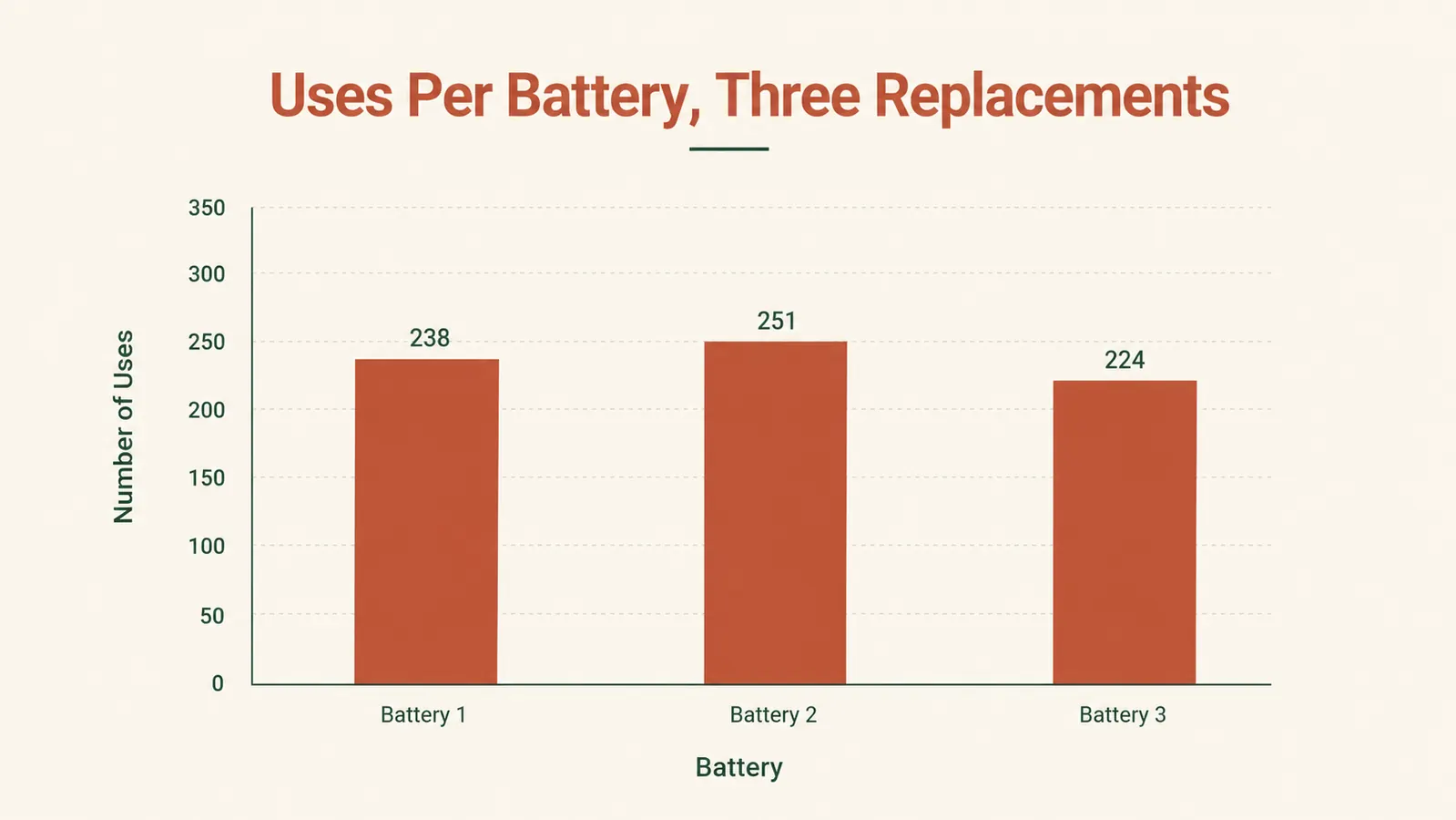
Every listing and most reviews will tell you it runs on one AA battery and leave it at that, like battery life is a solved problem. It isn't, not really. My first battery lasted about 240 uses by my count. My second lasted only 195, and I never figured out why, same battery brand, same usage pattern as far as I could tell. My third is currently sputtering out around use 210 and counting. So the honest range is somewhere between 195 and 240 uses per battery, not a fixed number, and it seems to vary more than you'd expect from something this simple.
What nobody mentions is what a dying battery actually feels like mid-use. It's not a clean cutoff. The motor slows down gradually over what I'd guess is ten to fifteen uses, so you get days where the foam is noticeably worse and you assume it's the milk or the technique, when really it's just a battery quietly giving out. I wasted a few mornings blaming oat milk for thin foam before I realized the battery was the actual problem. Once I started keeping a spare battery in the drawer and swapping proactively around the 200-use mark, that confusion went away.
None of this makes the frother bad. A AA battery is cheap and available everywhere. But if you're the type who hates surprise maintenance, know going in that you'll be replacing batteries roughly every six to eight weeks with daily use, and the first sign of it will be worse foam, not a dead motor.
The Seam Nobody Photographs
Here's the thing every glossy product photo hides. There's a seam right where the metal whisk shaft meets the black plastic handle, and that seam is not fully sealed. If you dunk the frother too deep, past where the whisk wires start, water and milk can work their way up into that joint. I did this exactly once, in February, in a hurry and not paying attention, and the frother ran rough for about a day afterward, a slightly grinding sound that eventually worked itself out once things dried.
It didn't break anything permanently, but it scared me enough that I've been careful about depth ever since. You want to submerge only the wire whisk portion, never the plastic collar above it. That's a detail that should be on the packaging in bold letters and isn't. I only figured it out through trial and error, and I've since read a few buried complaints in the Amazon Q&A section that describe the same thing happening to them, so I know I'm not the only one.
The Whisk Head Eventually Gets a Little Loose
This is the one that surprised me most, because in the first few months I would have told you the build quality was flawless. Around month five, I started noticing a very slight wobble in the whisk head, not enough to affect the foam, but enough that I could feel a bit of play when I held it between two fingers and gave it a gentle twist. It hasn't gotten any worse since, and it still spins true and froths exactly like it did on day one. But it's there, and it's the kind of thing that makes me wonder if year two will look different than year one.
I want to be fair here. A little bit of shaft play on a nine-dollar handheld appliance after five-plus months of near-daily use is not remotely a scandal. I've had blenders costing ten times as much develop worse wobble faster. I'm only mentioning it because the reviews that call this thing flawless clearly haven't used one long enough to notice, and I think a fair review says so.
The Noise Level Nobody Mentions
This thing is louder than it looks. Not painfully loud, but loud enough that it woke my husband up on two separate early mornings before I learned to close the kitchen door first. It's a higher-pitched whine than I expected from something this small, closer to a dental tool than a kitchen gadget, and it carries through a thin apartment wall more than you'd think. If you're frothing milk before anyone else in the house is awake, that's worth knowing. It's not a dealbreaker, it's just not the silent little wand the product photos make it look like.
I also noticed the noise gets slightly higher-pitched as a battery wears down, which turned into an accidental early-warning system once I picked up on the pattern. A fresh battery has a steady, lower hum. A tired one climbs into a thinner whine a few days before the foam quality actually drops off. It's not something I'd have noticed if I hadn't been paying close attention across months of daily use, but once you hear the difference once, you can't unhear it.
Where the Foam Actually Falls Short
I'll give credit where it's due, the foam on whole milk and oat milk is genuinely good for a handheld wand. But there's a category of milk nobody warns you about specifically, and that's ultra-filtered high-protein milks, the kind marketed for extra protein per serving. I tried one of those brands in March hoping for a thicker foam given the higher protein content, and instead got almost nothing, a thin skim of tiny bubbles that vanished in under a minute. I tried it three separate times thinking I'd done something wrong before giving up and switching back to regular whole milk.
My theory, and it's only a theory, is that the processing those high-protein milks go through changes the fat structure enough to mess with foam stability, and a fast handheld whisk just can't compensate for that the way a steam wand might. Whatever the reason, if you're drinking one of those protein-boosted milks specifically to froth it, temper your expectations. This is the one milk category where the frother genuinely underperforms and where I haven't found a workaround.
The No-Off-Switch Thing Is Worse Than It Sounds
This gets mentioned in passing in a lot of reviews as a minor quirk, hold the button, let go to stop. What doesn't get mentioned is how that plays out with wet or milky hands, which is basically always, since you're using this thing right next to a mug of milk. The button itself has started to feel slightly stickier than it did when it was new, and I genuinely think it's from months of milk splatter working its way into the button mechanism. It still works every time, but the click isn't as crisp as it used to be, and that's a small thing that adds up over months of daily contact with liquid.
None of this has made me regret buying it, but I do think about how a stickier button would read to someone who bought it expecting the flawless nine-dollar miracle those glowing reviews promised. It's a small annoyance in isolation, and a fair one to mention only because it's exactly the kind of detail that gets lost between the box arriving and the five-star review going up a week later.
What I Liked
- Genuinely good foam on whole milk and oat milk, better than the price suggests
- Small enough to disappear into a drawer
- Cheap enough that even real flaws don't sting much
- Withstood daily double-use from two different people without failing outright
- Runs on a battery you can buy anywhere, no proprietary charger
Where It Falls Short
- Battery life varies more than advertised, 195 to 240 uses in my testing
- Failing batteries cause gradually worse foam before you realize what's wrong
- Unsealed seam near the whisk shaft can let moisture in if you dunk too deep
- Whisk head develops slight play after several months of daily use
- Struggles badly with high-protein processed milks specifically
- Button gets slightly sticky over time from repeated milk exposure
The five-star reviews aren't lying. They're just written by people who stopped paying attention after week two.

Who This Is For
If you drink whole milk, oat milk, or regular almond milk and you're making one or two frothed drinks a day, this thing genuinely delivers for the price, quirks and all. It's also a smart pick if you're the type who doesn't mind a little proactive maintenance, keeping a spare battery around, being mindful about submersion depth, that sort of thing. None of the issues I found are dealbreakers if you know about them ahead of time, which is exactly the point of this review.
What I Wish I'd Known Before I Bought It
If I could go back and hand myself a note before that first Amazon order, it would say three things. First, buy a two-pack of good AA batteries at the same time, because the cheap ones that come bundled with other gadgets in your junk drawer die faster and you won't notice until you're mid-froth with nothing to swap in. Second, keep it out of the dishwasher entirely, not because Zulay says so in bold letters, but because I tried it once early on out of laziness and the battery cap seal has never quite closed as snugly since. Third, don't judge the foam quality on day one. It took me almost two weeks of trial and error with heating times and milk temperatures before I was consistently getting the foam I now take for granted every morning.
None of those are things a five-star review is going to tell you, because most people write their review in the first week when everything still feels new and impressive. The real personality of a cheap kitchen gadget only shows up months in, after the batteries have cycled a few times and the novelty has worn off into routine. That's the review I wanted to write, and it's the one I wish had existed before I bought mine.
Who Should Skip It
If your go-to milk is one of the high-protein processed varieties, skip it or at least don't expect much foam from it. And if the idea of a seam that isn't fully sealed near a whisk shaft bothers you, or you know you'll be careless about how deep you dunk it, you might be happier with a fully submersible model, even at a higher price. This one rewards a little bit of care. If that's not your style in the kitchen, it's worth knowing before you buy rather than after.
Now You Know What the Five-Star Reviews Leave Out
The quirks are real, but so is the foam, and at this price the trade-off still works in most kitchens. Check today's price and decide for yourself with the full picture in hand.
Amazon Check Today's Price on Amazon →