
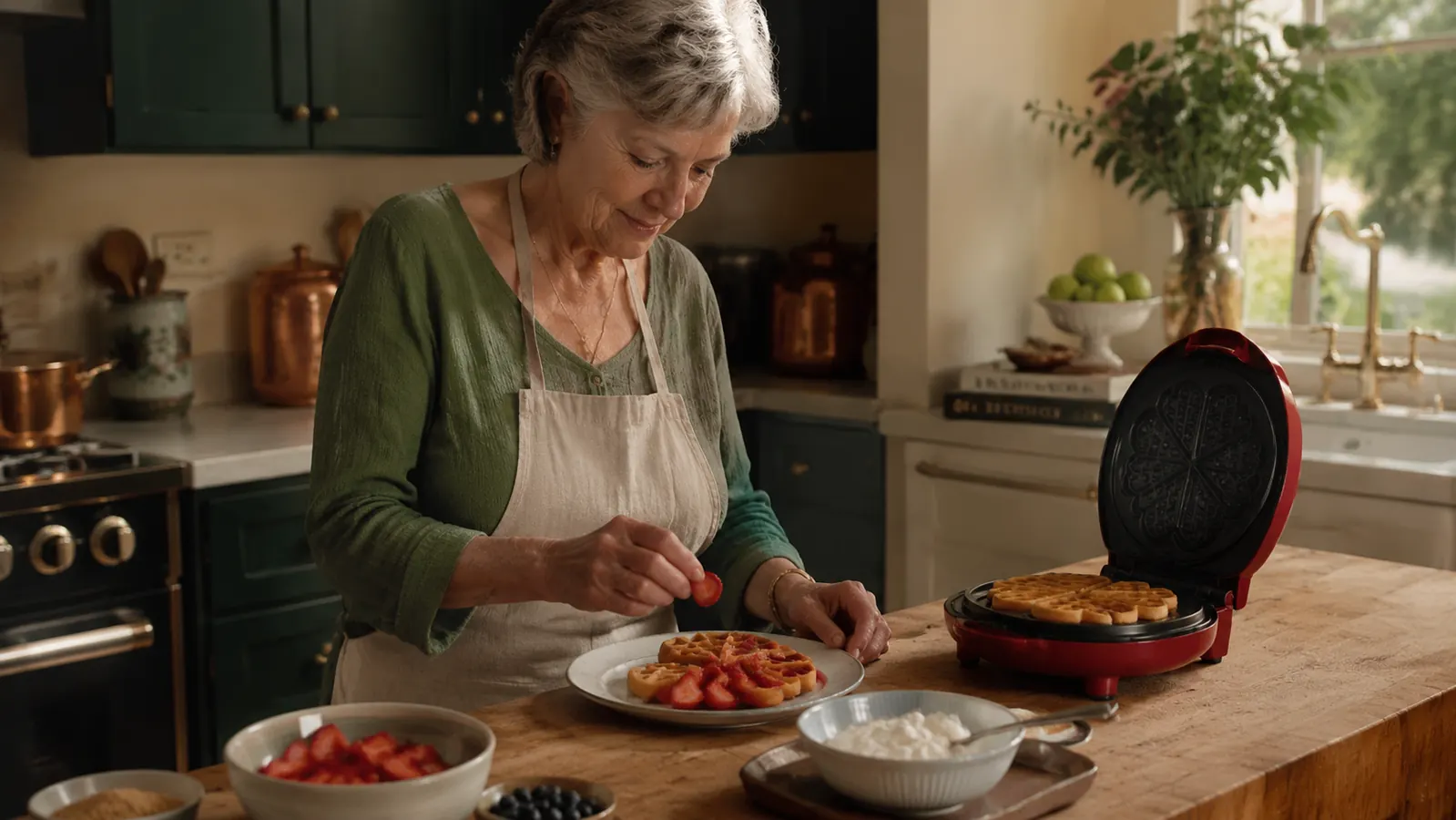
I almost returned my DASH Mini Waffle Maker the first week I had it. Not because it's a bad appliance, it isn't, but because I bought it after reading a pile of five-star reviews that made it sound like a miracle gadget, and the reality was a little more ordinary than that. My neighbor Carol lent me hers to try before I bought my own, and my first attempt was a gummy, half-cooked mess because nobody warned me the preheat light lies a little. So before I tell you why I ended up keeping mine and buying a second one as a gift for my sister, I want to walk through the stuff the glowing reviews tend to skip.
This is the honest version. Not a takedown, I still use this thing regularly, but a real accounting of where it disappoints, where the marketing oversells it, and who's going to be annoyed they bought one.
The Quick Verdict
A genuinely handy little appliance once you know its quirks, but the online hype oversells the speed and undersells the maintenance. Buy it for what it actually is, not what the reviews promise.
Amazon Check Today's Price →Worth owning, just not for the reasons the five-star reviews claim.
Once you know what to expect, this is a solid little machine for the price. Check today's price and current availability on Amazon.
Amazon Check Today's Price on Amazon →How We Tested
I didn't just make a waffle and call it a day. Over about ten weeks I used Carol's loaner, then my own once I bought it, roughly three times a week, sometimes back to back to see how it handled repeat batches, sometimes after it sat unused for two weeks to see if the nonstick surface needed reseasoning. I also deliberately overfilled it a few times, because that's what actually happens in real kitchens, not the careful measured pour you see in product photos.
I timed everything with my phone, not a rough guess. I tracked how long the indicator light said it was ready versus how long it actually took to cook through properly. And I made a point of testing it the way a skeptical buyer would, looking for the failure points, not just the wins.
I also asked Carol to keep using her original one so I could compare notes on a machine that had a full year of wear on it against my newer unit, which turned out to be more useful than I expected.
I even ran a side-by-side one Sunday morning, her well-worn machine and my brand new one plugged into the same outlet strip, cooking identical batter at the same time, just to see if there was any real difference in how fast each one browned a waffle. There wasn't much, maybe twenty seconds either way, which told me the coating wear Carol had didn't seem to be slowing her machine down, just changing how it looked.
The Preheat Light Isn't as Trustworthy as You'd Think
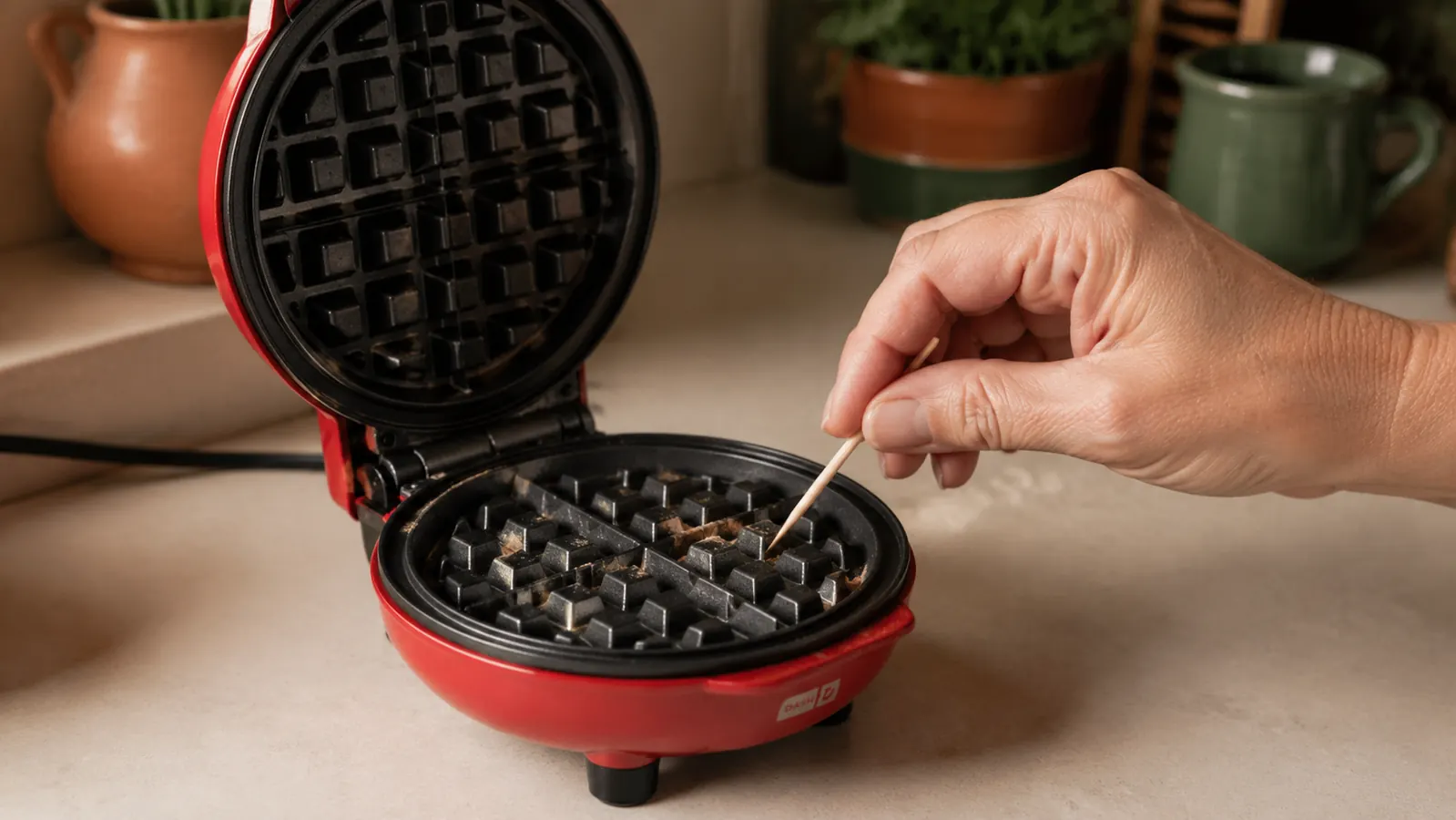
This is the thing that almost sent it back to Amazon. The indicator light switches to green well before the plates are actually hot enough to cook a waffle through evenly. On my first three attempts using Carol's machine, I poured batter the second the light changed, and every single time the center came out doughy while the edges were done. I thought I was doing something wrong.
It turns out the fix is simple, just wait an extra minute or two past the light change, but nobody tells you that upfront. The manual doesn't mention it either. I now count to ninety after the light turns green before I pour, and that solved it completely. But if you're the type who trusts an indicator light at face value, you'll get a few bad waffles before you figure this out on your own.
I mentioned this to Carol and she laughed, because she'd figured out the same workaround on her own months earlier and never thought to pass it along. That's the thing about a lot of small appliance quirks, everyone who owns one eventually stumbles onto the fix, but it never makes it into an actual review because by the time you're writing about the product, you've already forgotten it was ever a problem. I'm writing it down here so you don't have to waste batter finding out the hard way.
The Nonstick Coating Isn't Bulletproof
Carol's machine, the one she's had over a year, has developed a small dull patch near the hinge where the coating has thinned. It still releases waffles fine there, but you can see it if you look closely, and she said it started showing up around month eight. Mine hasn't gotten there yet, but knowing hers did changes how I treat my DASH now. I stopped using metal utensils near it entirely, even just to nudge a stuck edge, and I switched to a silicone-tipped tool for anything that needs coaxing out.
The reviews that call this thing indestructible aren't being fully honest. It's a thin nonstick coating on an inexpensive appliance, and like any nonstick coating, it degrades with heat cycling and abrasion over time. It's not going to fail catastrophically, but don't expect it to look brand new after two years of heavy use either.
What actually helps, based on comparing notes with Carol, is letting the machine cool completely before wiping it down, rather than hitting it with a damp cloth while it's still warm. Wiping it hot seemed to be what wore her coating thin faster near the hinge, since that's the spot that stays hottest longest after you unplug it. I've made a habit of just walking away and coming back to it ten minutes later, and so far that patience has paid off.
It's Genuinely Slow If You're Making More Than Two Servings
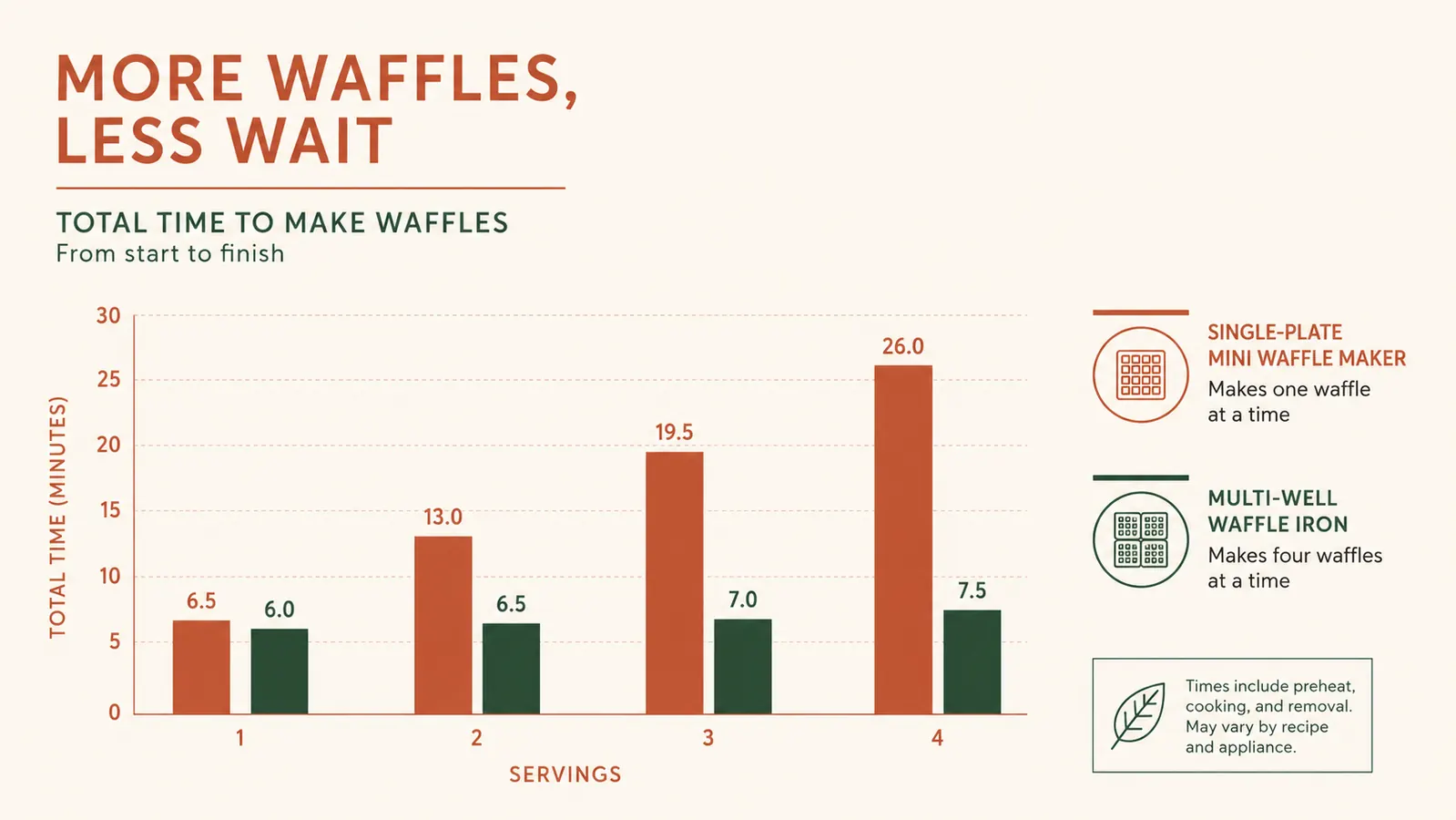
This is math the marketing photos conveniently avoid showing. One waffle at a time, roughly three minutes each once you're past the first cook, plus the time to open, extract, close, and let it recover heat between waffles. For two people, that's fine, maybe ten minutes total. My sister has three kids, and when she borrowed my DASH over a visit last spring, she timed it at just under forty minutes to feed everyone breakfast, waffle by waffle, with the last kid getting cranky waiting on his turn.
If you've got a family of four or more who all want waffles at the same time on a Saturday morning, this machine will test your patience. It's built for one or two people, and it's honest about that if you actually do the math instead of assuming it scales the way a full-size iron would.
The Batter Amount Takes Real Trial and Error
Nobody tells you the exact right amount of batter to use, and the manual's suggestion is vague. Too little and you get a waffle with holes and thin patches. Too much and it oozes out the sides and hardens into a crusty ring you have to scrape off later, which is genuinely annoying and takes longer than the actual cooking. It took me about six waffles before I landed on roughly three tablespoons as my sweet spot, and that number will vary depending on your batter's thickness.
I'd recommend starting with less than you think you need. You can always crack the lid and add a touch more if there are gaps, but you can't easily undo an overflow once it's already dripping down the side and pooling on your counter.
Other Options I Almost Bought Instead
Before I settled on this one, I spent an evening scrolling through a handful of similar mini waffle makers, mostly ones with novelty shapes, hearts, cartoon characters, that sort of thing. I passed on those mainly because I wasn't sure the shaped plates would hold up as well over time as a simple round grid, and I didn't want to pay extra for a shape my grandkids would outgrow interest in after a month.
I also looked briefly at a stainless steel version from a different brand, heavier, pricier, and reviewed as being slower to preheat despite the sturdier build. For what I needed, an appliance for one or two people that I could store easily and wouldn't feel bad about if it didn't work out, the lighter plastic-bodied DASH made more sense. If durability over ten years is your top priority and price isn't a factor, the steel option is worth a look, but for most people in a small kitchen, I don't think it's worth the tradeoff in weight and storage space.
Where It Actually Delivers
None of this means it's a bad purchase, and I don't want to make it sound worse than it is. Once you know the quirks, it's a reliable little machine. My sister ended up buying her own after that chaotic visit, mostly for weekday mornings when it's just her and her youngest home, and she says it's become part of their routine before he catches the bus.
The plug-in-and-go simplicity is real. There's no learning curve for the controls, because there aren't any, just plug it in and wait. For the price, you're not risking much if it turns out not to fit your routine, and that low-stakes commitment is honestly a big part of why I'd still recommend it despite the gripes above.
It also travels well if you're the type who visits family for holidays and doesn't want to leave your good appliances behind. I've packed mine in a tote bag for a weekend at my sister's more than once, and it's light enough that it doesn't feel like hauling actual kitchen equipment.
What the Marketing Photos Don't Show You
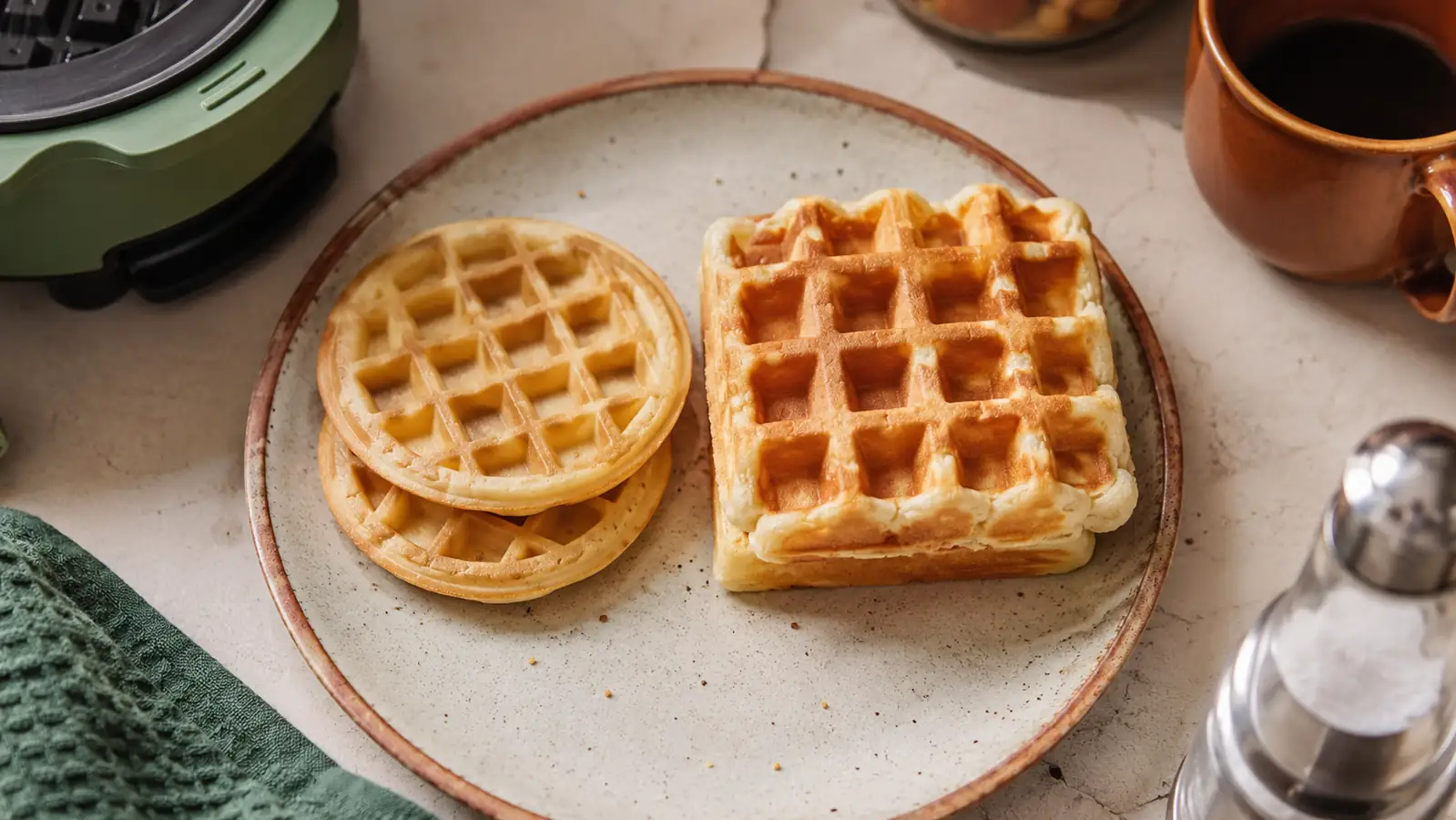
Every product photo shows a perfectly golden, evenly browned waffle with crisp edges. In real use, especially your first few attempts, you'll get uneven browning more often than not, lighter on one side, slightly darker near the hinge where the heat seems to concentrate a bit more. It's not a defect, it's just how a small single-plate appliance heats, but it's not the flawless result the packaging implies.
The waffles are also noticeably thinner than what most people picture when they hear the word waffle. If you grew up on thick, deep-pocketed Belgian style waffles like I did, the first one out of this machine might feel underwhelming in your hand. It's a different style entirely, closer to a classic American waffle, thin enough that syrup runs off the edges instead of pooling in deep pockets.
What I Liked
- Simple to use with zero learning curve, plug in and wait
- Low price means low risk if it's not the right fit for your routine
- Light enough to travel with or store in a tight cabinet gap
- Cooks a consistent single portion without wasting batter on a family-size iron
Where It Falls Short
- Preheat indicator turns green before it's actually ready to cook evenly
- Nonstick coating shows wear after roughly eight months of heavy use
- Slow for feeding more than two people, one waffle at a time adds up fast
- Batter amount takes several attempts to dial in correctly
- Waffles are thin and uneven in browning compared to the marketing photos
The preheat light turns green well before the plates are actually ready. Nobody puts that in the five-star reviews, but it's the single biggest reason people think they got a defective unit when they didn't.
Who This Is For
If you're realistic about what a small, inexpensive appliance can do, and you're cooking for one or two people, this earns its keep. It's especially good for someone who wants an occasional weekday waffle without a production, or someone who travels between homes and wants something light enough to pack. My sister's experience proved it works fine for a single parent and one kid on a school morning, just not for the whole household at once.
It's also a reasonable pick if you're testing the waters on whether you even like making waffles at home before committing to a nicer, pricier iron. There's very little to lose here financially, and it teaches you your own batter preferences fast.
I'd also point it toward anyone who lives with a partner who has different portion needs than they do. My husband and I don't always want the same breakfast, and being able to make exactly one waffle for him while I have oatmeal, without heating up a whole iron for a single serving, has turned out to be more useful day to day than I expected when I first bought mine.
Who Should Skip It
Skip it if you're feeding a full family every weekend and don't want to stand there cooking one waffle at a time for forty minutes. Skip it if thick, deep-pocketed Belgian waffles are non-negotiable for you, this machine simply doesn't make that style. And skip it if you're the type who gets frustrated by needing a little trial and error to dial in results. This isn't a foolproof appliance out of the box, it takes a handful of attempts to get comfortable with it, and if that's not something you have patience for, you'll be annoyed within the first week.
One more honest note. If you're buying this expecting it to replace a real waffle iron entirely, meaning you want the option to occasionally make a big batch for company, you'll end up frustrated. I keep a separate, larger waffle iron in a bottom cabinet for the two or three times a year we host a bigger breakfast, and I don't think that's a failure of this machine, it's just not what it was built to do. Buy it for daily, small-batch use, and it won't let you down.
Know the quirks going in and it's a smart, low-risk buy.
Once you know to wait past the light and dial in your batter amount, this becomes a reliable little breakfast tool. See current pricing on Amazon.
Amazon Check Today's Price on Amazon →