
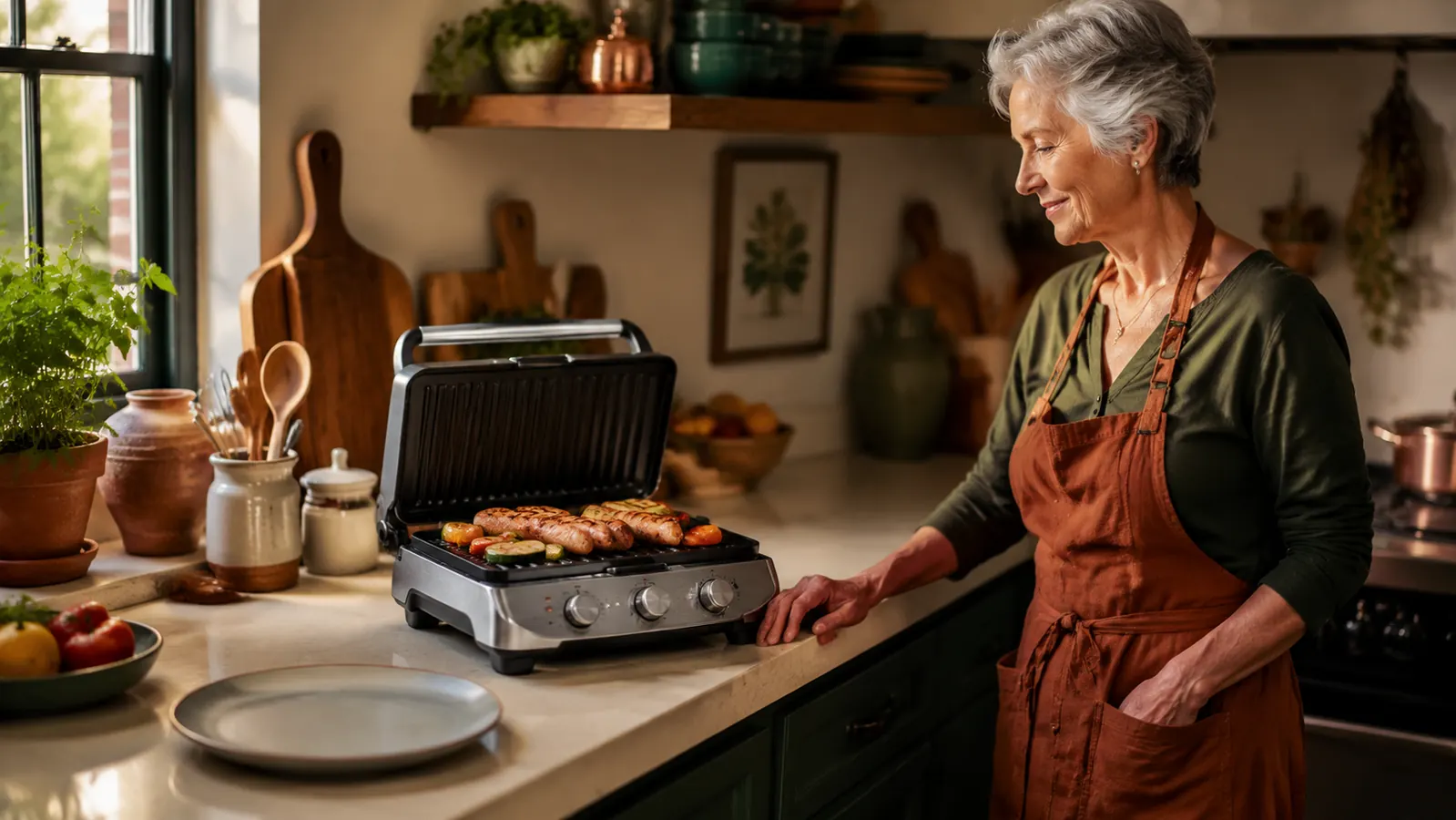
I bought my George Foreman GR10B Mini Grill the same week I moved into my one-bedroom apartment, about ten months ago now. I'd just come out of a house with a real kitchen, a real stove, and a husband who liked to eat big. Downsizing meant downsizing dinner too, and I wasn't sure a budget grill the size of a laptop was going to cut it for someone who used to roast whole chickens on Sundays for six people.
It's cut it just fine. I've used this thing four or five nights a week since last September, mostly for chicken breasts, pork chops, the occasional panini, and enough grilled vegetables to make my doctor happy. My son teases me that I've turned into a one-woman infomercial for it, and I suppose I have. This is what I've learned after nearly a year of leaning on a grill that's smaller than most of my dinner plates.
The Quick Verdict
A genuinely useful daily grill for one or two people. It runs hot, cooks fast, and cleans up in under two minutes. The cooking surface is too small for a family, and the nonstick coating shows wear after heavy use, but for solo or couple cooking it earns its spot on the counter.
Amazon Check Today's Price →Cooking for one shouldn't mean giving up on real dinners.
The GR10B is built for exactly this: a 7.3 by 5.6 inch surface, two open panels for double the space when you need it, and a floating hinge that presses evenly on whatever you're cooking. Check today's price before you decide.
Amazon Check Today's Price on Amazon →How I've Used It
My routine is boring in the best way. Most weeknights it's one chicken breast, sometimes pounded thin, sometimes not. I season it, wipe a little oil on the plates even though George Foreman says you don't need to, and close the lid. Six to seven minutes later I've got dinner. No pan to scrub, no stove burner to babysit, no smoke alarm going off because I stepped away to answer the phone or let the dogs out.
On weekends I open the two plates flat, which the GR10B lets you do thanks to that floating hinge, and use it like a griddle for a panini or a couple of turkey burgers side by side. I've also done frozen fish fillets straight from the freezer more times than I'd like to admit, and they come out better than I expected, just add two or three extra minutes over the fresh-thawed time.
I keep it plugged in on the counter next to my toaster, which tells you something. I don't put appliances I don't use daily on display, not in a kitchen this size. Everything gets earned counter space or it goes in a cabinet. This one earned the spot in the first two weeks and hasn't lost it since. My daughter came to visit in the spring and said it was the first thing she noticed, sitting there like it belonged.
How It Cooks
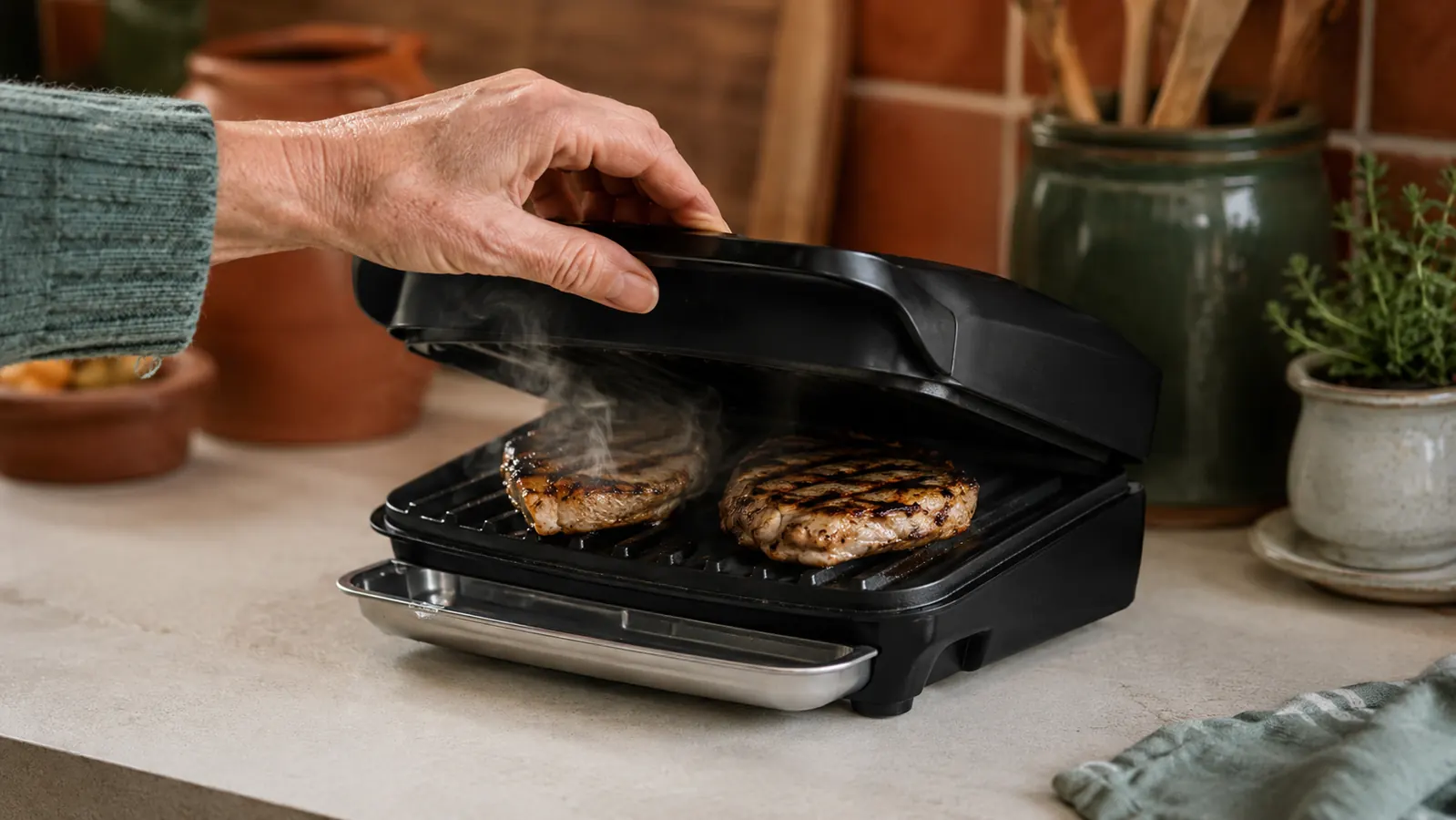
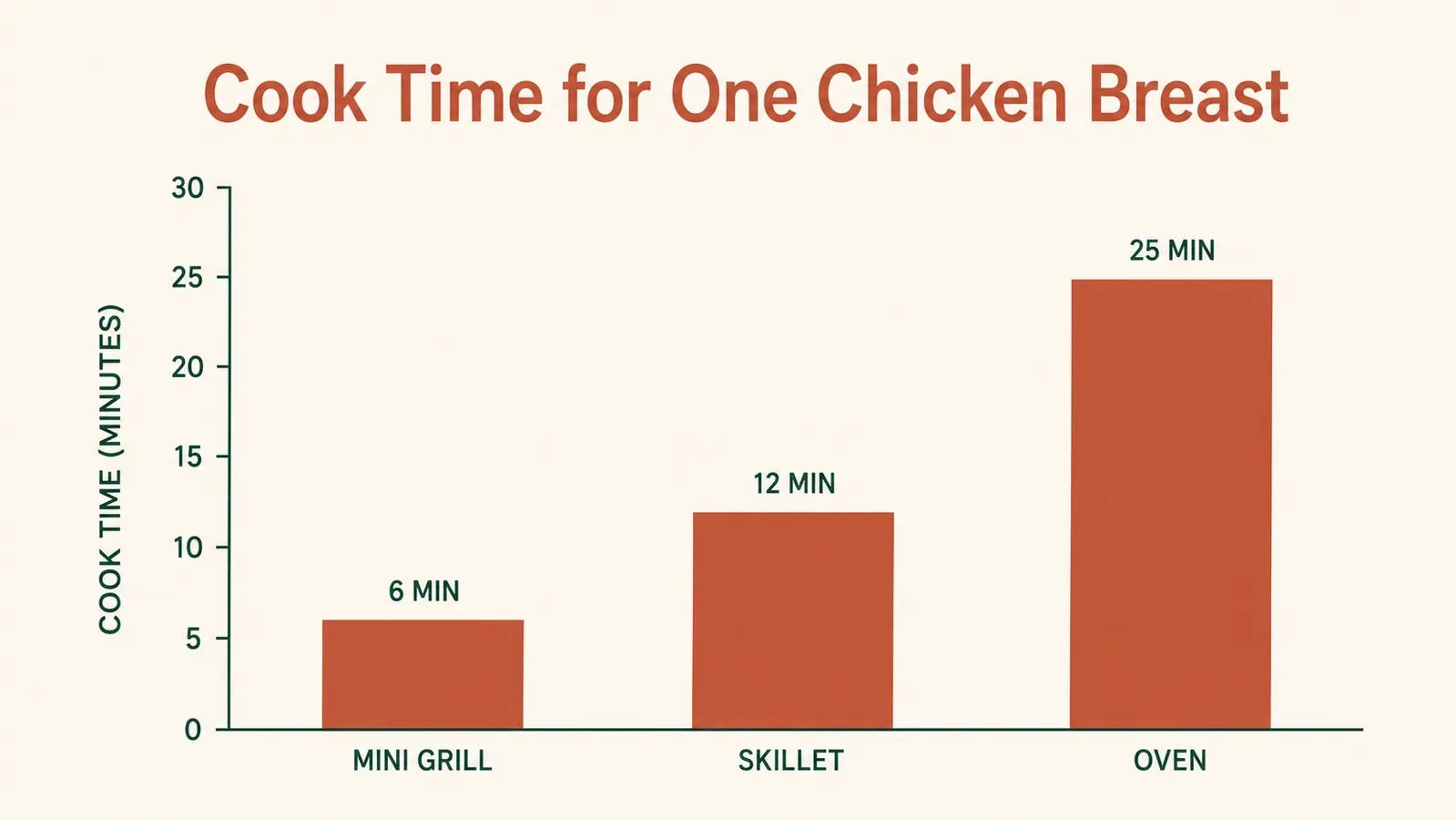
The sloped grill plates and the angled design are the whole point of a George Foreman grill, and they still work the way they did decades ago when the brand first made its name doing this. Fat drains down into a small tray at the front, which means less grease sitting under your food and less mess for you to deal with after. A chicken breast that would take twelve minutes in a skillet, flipping halfway through, is usually done on the GR10B in six to eight minutes because it's cooking from both sides at once.
Pork chops, about three quarters of an inch thick, take roughly seven minutes and come out with real grill marks, not the pale gray you get from steaming in a pan that's too crowded on a small stove. I've also done thin-cut steaks for myself on nights I wanted to feel a little fancy, and honestly they hold up better than I expected from a budget appliance. I wouldn't put it up against a cast iron skillet on a hot sear, but for a weeknight, it's more than fine.
Where it struggles is anything thick. A bone-in chicken thigh or a thick-cut pork chop over an inch doesn't get even contact from both plates, so you end up with a good sear on the outside and a slightly undercooked center if you're not careful. I've learned to either pound things thinner with a meat mallet before they go on, or finish thicker cuts in the oven for five extra minutes to be safe.
Vegetables and the Odd Meals I Didn't Expect to Work
I didn't buy this thing thinking about vegetables, but they've become half of what I cook on it. Zucchini slices, asparagus spears, halved bell peppers, they all take four to five minutes and come out with real char instead of the sad, boiled look I used to get from a microwave. I toss them with a little olive oil first so they don't stick, and I've stopped turning on the oven just to roast a single serving of vegetables since this does it faster and without heating up the whole apartment.
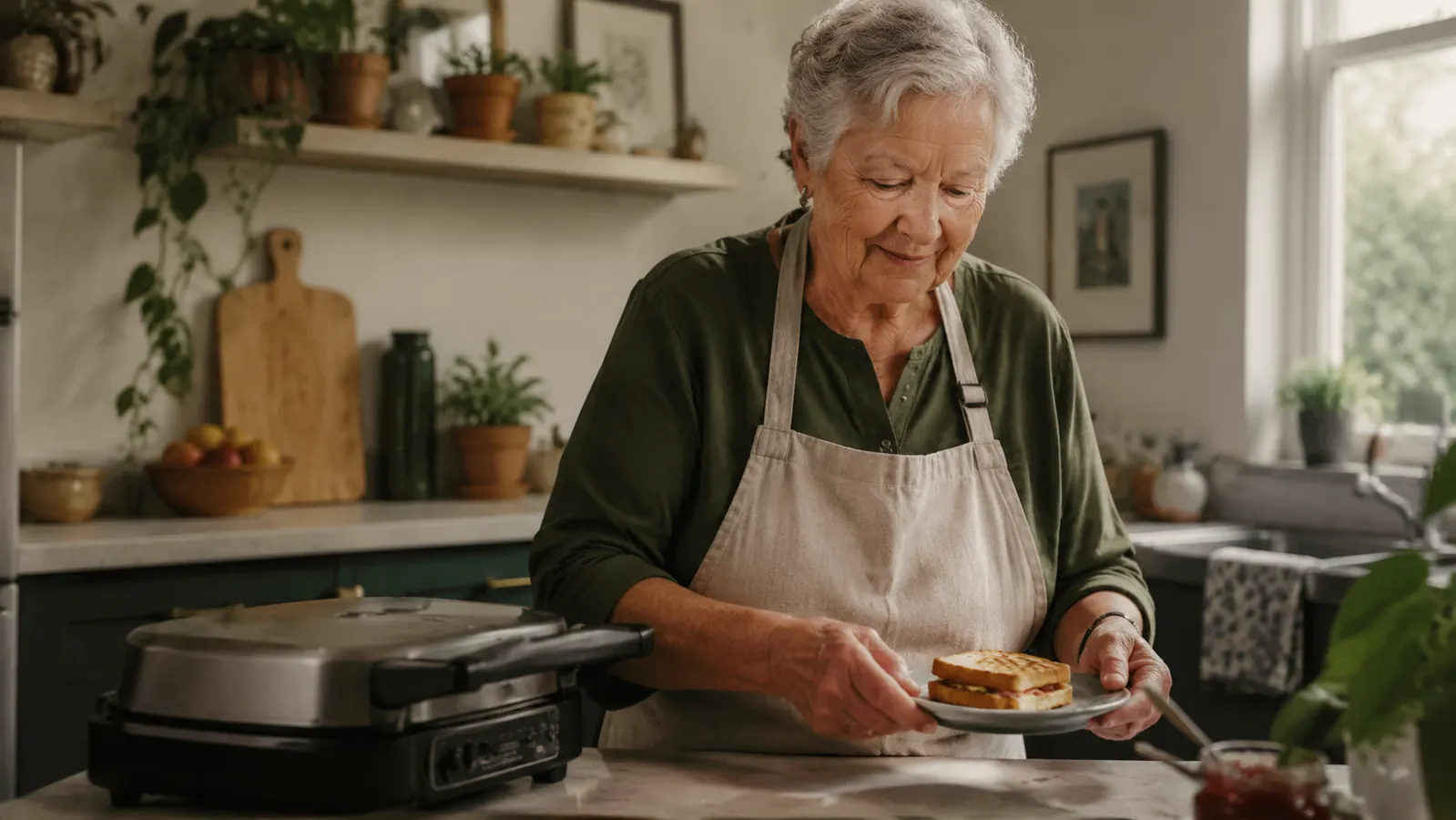
I've also used it for things George Foreman probably never advertised, like reheating leftover pizza slices, which crisps the crust back up better than a microwave ever could, and pressing quesadillas, which come out with a nice golden crust on both sides in about three minutes. Not every experiment worked. A grilled cheese sandwich with too much butter on the outside made a mess of the plates and took longer than expected to clean, so now I go lighter on the butter and it's fine.
Size and Counter Space
This is the whole reason I bought it, so let me be specific. The cooking surface is 7.3 by 5.6 inches, which sounds tiny until you realize that's plenty for one chicken breast, two burger patties, or a sandwich cut in half. Closed, the whole unit takes up less counter footprint than my coffee maker, and it's light enough that I can lift it one-handed to wipe underneath. It stores upright in a cabinet if I need the counter back for something bigger, though mine mostly just stays out.
For two people eating the same thing, it works, you just cook in two rounds or use the open-flat mode to do both portions side by side. For a family of four wanting dinner all at once, this isn't your grill. I want to be upfront about that because I've seen reviews from people clearly cooking for a household expecting more capacity than a compact grill like this was ever built to give them.
Cleanup, Honestly
This is where the GR10B earns a lot of loyalty from people like me who are done scrubbing pans at eight at night. The plates are nonstick and the drip tray slides out from the front. Most nights I wipe the plates with a damp paper towel while they're still warm, and that's it, done in under two minutes including putting it away.
Maybe once a week something sticks enough, usually a sugary marinade or a cheese that melted out of a sandwich, that I need a little dish soap and a soft sponge. Never anything a scrubber or steel wool has been required for, and I've been careful never to use one anyway since that would wreck the nonstick coating fast.
The plates on my unit are not removable, which is worth knowing going in. You wipe them in place rather than popping them into the sink like you would with some newer models. That's a tradeoff I've made peace with because the cleanup is still faster than anything else in my kitchen, but if you want fully removable, dishwasher-safe plates, that's a different, pricier George Foreman model, not this one.
What I Considered Instead
Before I bought the GR10B, I looked at a couple of alternatives. A dedicated panini press was tempting since I make a lot of sandwiches, but most of those are built for bread and don't do as well with proteins like chicken or fish. I also considered just keeping a cast iron skillet and calling it a day, which I did for the first month after my move, mostly out of stubbornness and not wanting to buy another appliance so soon after downsizing everything else.
The skillet route worked, but it meant more time standing over the stove, more oil, and a pan to scrub every single night, which after a full day feels like the last thing I want to do. The mini grill cut my active cooking time by more than half and moved cleanup from the sink to a paper towel. For someone in my stage of life, cooking mostly for herself most nights, that tradeoff wasn't close.
Ten Months In, What's Changed
The nonstick coating isn't quite what it was in month one. Eggs and delicate fish now need a light spray of oil where they used to release clean without any help. That's normal wear for any nonstick surface used almost daily for the better part of a year, and it hasn't affected how the grill cooks, just how easily things slide off the plates when I forget the oil.
The hinge still floats and presses evenly, which matters more than people realize until they've used a grill where it doesn't and one side of your food comes out raw. No wobble, no gaps between the plates and whatever I'm cooking. The indicator light still works, the cord hasn't frayed, and it heats up in under three minutes every single time I plug it in. For an appliance that's been run through several hundred meals at this point, I'm satisfied with how it's holding up, and I don't see myself replacing it anytime soon.
What I Liked
- Cooks fast, most meals done in 6-10 minutes
- Tiny counter footprint, 7.3 x 5.6 inch surface
- Cleanup takes under two minutes most nights
- Floating hinge presses evenly on uneven cuts
- Opens flat for griddle-style cooking or two portions at once
- Affordable at under $28
Where It Falls Short
- Too small for family-size cooking
- Plates aren't removable for dishwashing
- Struggles with anything over an inch thick
- Nonstick coating shows wear after months of daily use
I used to think a grill this small was a compromise. After ten months, I think it's just the right size for how I actually cook now.
Who This Is For
If you're cooking for one or two people most nights, especially in a kitchen where counter space is precious, this grill solves a real problem. It's also a smart pick for anyone who hates babysitting a stove burner or scrubbing a skillet after a simple piece of chicken. I'd recommend it without hesitation to a friend downsizing like I did, or to a college kid setting up a first apartment kitchen without much room to spare. I also think it's a good fit for anyone easing into retirement and cooking for a partner instead of a whole family the way I used to, when a big stretch of counter and a full-size range start to feel like more kitchen than you actually need most nights.
Who Should Skip It
If you're regularly cooking for a family of four or more, or you tend to cook thick cuts of meat like bone-in chicken thighs or full-size steaks, you'll be fighting the size limits constantly and it'll frustrate you. Look at a larger George Foreman model with a bigger plate surface, or a dedicated panini press if bread-based sandwiches are your main use case. This one is built for a scale of one, maybe two, and it knows exactly what it is. If batch cooking for the week ahead is your style, meal prepping five chicken breasts at once, this small a surface will feel like a bottleneck rather than a shortcut, and you're better off with a full-size grill pan or the oven.
Ten months of weeknight dinners later, I still reach for it first.
If your kitchen is small and your meals are usually for one or two, the GR10B is worth the counter space. Check today's price on Amazon before you decide.
Amazon Check Today's Price on Amazon →